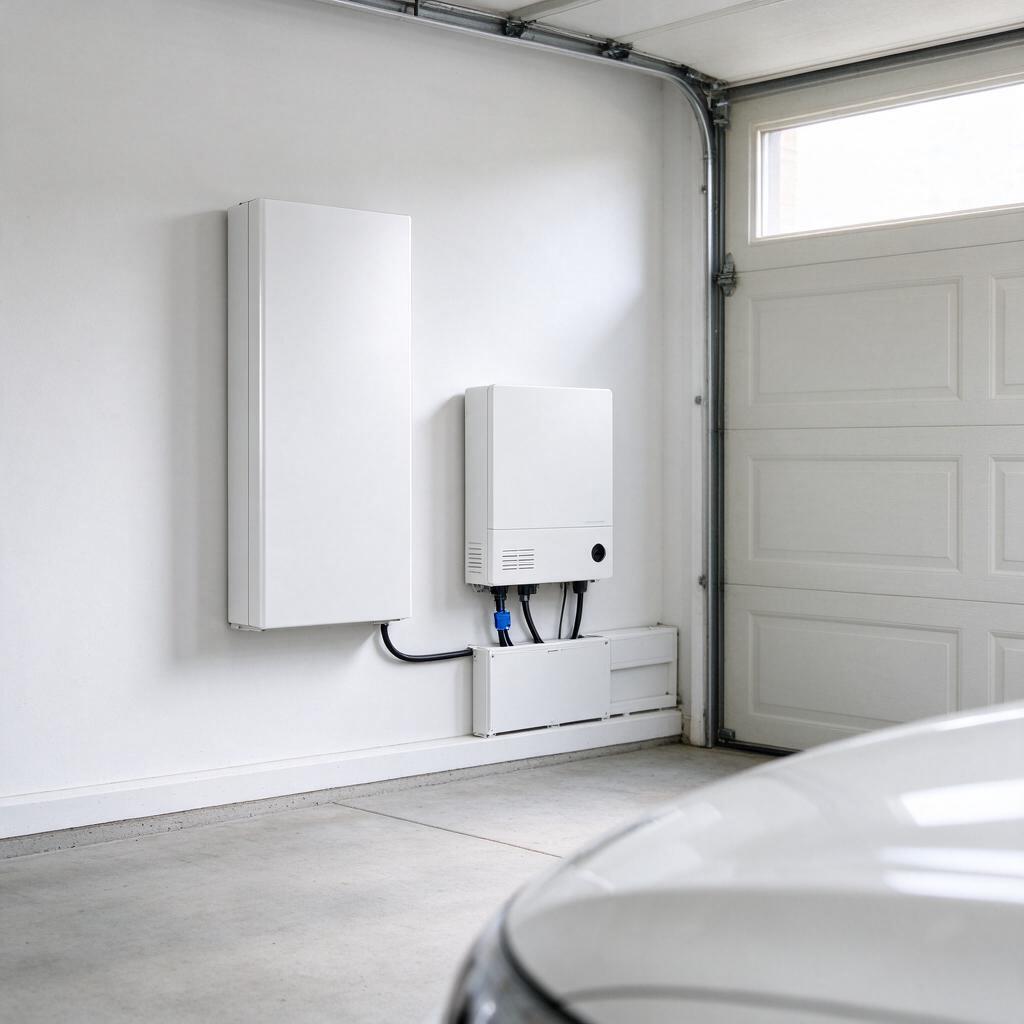
Wall-mounted unit specification in full
| Nominal voltage | 51.2V |
|---|---|
| Capacity | 300Ah class |
| Energy | 15.3kWh |
| Cycle life | > 6,000 cycles |
| Storage line classes | 3kWh / 5kWh / 7kWh / 10kWh / 15kWh / 20kWh (storage line) |
| Chemistry | LiFePO4 |
| Mounting | Wall-mounted |
Sizing a home system
The right class is the one matched to the home's evening load and its essential circuits — no more, no less. The class steps in this range let an installer match the battery to the array and the household rather than overselling capacity. If you are equipping a programme, stock the middle classes and order the extremes against projects.
15.3kWh in a home energy plan
The figure — 51.2V, 300Ah class, 15.3kWh — is the largest single-unit figure in the wall line below the 20kWh class. Whether it covers a given home comes out of that home's consumption data.
Smaller consumption figures step down the class ladder — the storage line spans 3kWh to 20kWh — and the sizing conversation with your installer should start from a day of real consumption data, not from the largest number that fits the wall.
The 6,000-cycle rating in service terms
The rating is more than 6,000 cycles, in a product category where the lead-acid alternative is replaced on a much shorter rhythm.
The wall format suits fixed service: mounted beside the inverter, out of the way of the floor.
Installing the wall format
Wall mounting keeps the battery off the floor, beside the inverter it works with, in the garage or utility space where the household's energy plant now lives. Programmes stocking this line should sell the installation as part of the product: survey, inverter pairing confirmation, and the class chosen from consumption data.
Tell us the inverter brands your market installs and the classes you want to stock, and we will confirm pairing and quote The classes step through 3, 5, 7, 10, 15 and 20kWh, with the 51.2V 300Ah unit — 15.3kWh, rated above 6,000 cycles — near the top of the line.
The steps are close enough that a survey landing between classes moves one rung rather than jumping to a different product line. The 51.2V 300Ah unit — 15.3kWh, rated above 6,000 cycles — is the reference size; the classes below it step down through 10, 7, 5 and 3kWh, and the 20kWh class is the top of the line. Tell us the array size alongside the inverter brand: the class recommendation is worked from the home's consumption data.
The wall unit in a programme
For installers, this line works as a system sale rather than a component sale: survey the household's consumption, confirm the inverter pairing, choose the class, install, and hand over a plant the customer lives with day to day rather than maintains with a spanner. The programme economics follow that shape — fewer, larger, better-supported installations instead of a shelf of small transactions.
Stocking follows the same logic: the middle classes on the shelf for the standard survey outcome, the extremes ordered against named projects, and one demonstration installation — ideally the installer's own premises — doing the persuading that no brochure in this category has ever managed.
Ordering the wall-mounted unit
Inverter compatibility is the key question — tell us the inverter brands your market installs, plus the classes you want, and we will confirm pairing and quote.
Wholesale inquiries
Tell us the model, your quantity and your market — we reply with a quotation and lead time.