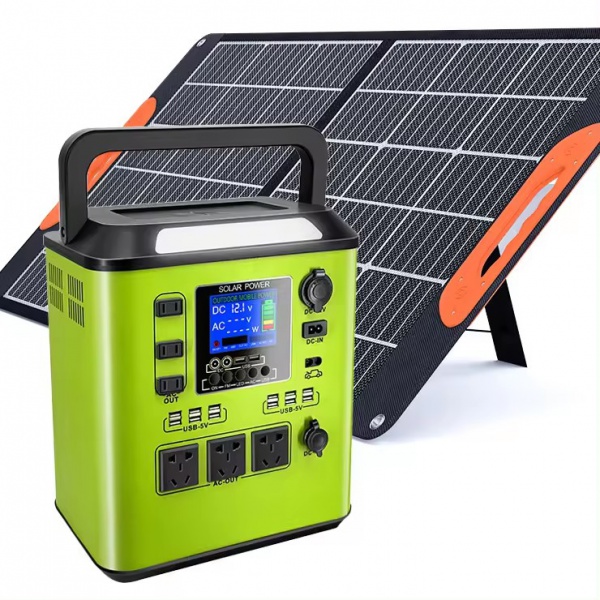
BPS-500W specification in full
| Rated output | 500W |
|---|---|
| Battery capacity | 450Wh |
| Battery chemistry | LiFePO4 |
| Fast charging | QC3.0 |
| AC output | One AC socket |
| Lighting | Built-in LED light |
| Charging | Solar charging |
The 500W class
The 500W class is the entry end of the power-station range: the smallest station in the line, at 500W output and 450Wh capacity. The unit carries one AC socket, QC3.0 fast charging and a built-in LED light.
450Wh, honestly budgeted
Capacity claims only mean something against a load list, so here is this station's arithmetic. Against LED lighting and phone charging — the lightest camping loads — 450Wh is a generous budget. Add a camping fridge — the load that decides most camping setups — and the fridge's duty cycle becomes the budget: an efficient fridge in kind weather, and the station carries the camp; a hard-working fridge in hot weather, and the day's solar input has to carry its share of the load.
Budget the loads first, then choose the station — the sizing guide on our blog works the method through in full, with the worksheet your sales team can reuse at the counter.
The 500W output class in practice
Work the class from the list: total the loads that run at once and set the total against 500W. The arithmetic is the whole discipline at this size: a load list that totals 300W leaves 200W of headroom, and a single load above 500W is outside the class altogether, whatever it is.
The details that sell at retail are the practical ones: QC3.0 fast charging for the phones everyone actually carries, one AC socket for the laptop or the fridge, and a built-in LED light that turns the station into the campsite's lamp as well. Small things, noticed every trip.
Work the budget from the device side as well: list what the camp actually runs — two phones, a tablet, LED lighting, the fan — and price each item in watt-hours before the station is chosen. The 450Wh figure then stops being a headline and becomes a checked total, and the fridge's duty cycle is the one variable worth a second look, because it moves more than everything else on the list combined.
The BPS-500W in a retail range
This is the class a range opens with: the entry model of the line. The 1000W class sits above it in the same range.
Private labelling covers the unit and the box, so the entry model can carry your brand from the first order Samples are the fastest evaluation in this catalogue: one unit, one weekend, your own loads, and the class has made its own case.
The BPS-500W as a first purchase
The programme should treat it as an introduction rather than a transaction: honest sizing at the counter, and a product that does exactly what the box said.
Ordering the BPS-500W
Tell us your destination market and whether you want your own branding on the unit and box. Branding is a standard option on this model; market requirements are part of the inquiry, and the reply confirms the configuration being quoted.
Add the destination market's socket standard to the inquiry: on this class the socket is settled in the specification discussion, not picked from a catalogue option.
Send the load list with the inquiry — the devices, their watts and the hours each one runs — together with the destination market and the branding the unit and box should carry.
Wholesale inquiries
Tell us the model, your quantity and your market — we reply with a quotation and lead time.