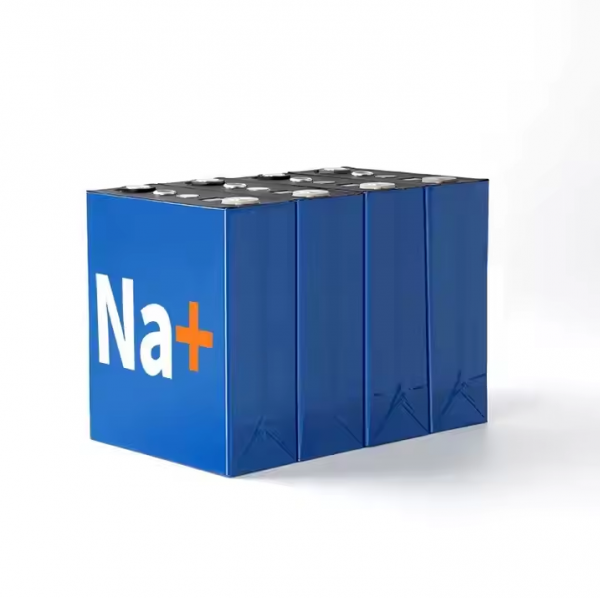
Where NFPP fits
These cells are designed for commercial and industrial energy storage, backup power, renewable energy systems and customised battery pack applications. In stationary service the priorities are different from traction: thermal stability, tolerance of daily cycling, and predictable behaviour over a long installed life.
NFPP chemistry is also the chemistry of our 48V 160Ah forklift reference build, where it handles the daily charge-discharge rhythm of warehouse work.
What NFPP chemistry is chosen for
NFPP is a poly-anion chemistry: the cathode structure holds its oxygen tightly, which is the materials-level reason for its thermal stability. In stationary service that property is bought deliberately. A storage installation sits unattended for years, cycles daily, and is judged on whether it behaves predictably for all of it — not on how much energy can be squeezed into the smallest box.
The cell line is designed for commercial and industrial energy storage, backup power and renewable energy systems, and the same chemistry appears in our forklift range as the 48V 160Ah NFPP reference build, where the daily charge-discharge rhythm of warehouse work is its home duty. Two very different installations, one requirement: nothing dramatic, ever.
How NFPP cells are bought
This line is quoted per project, because the right cell count and configuration follow from the installation, not the other way round. The useful first message describes the storage capacity you are building, the charge and discharge profile across a typical day, and the environment the system will sit in.
Test before volume: a cell that has been through your own test protocol is worth more than any data sheet — including ours. Tell us the protocol you intend to run and the sample quantity it needs, and the samples will be quoted with the cell order.
NFPP next to the 3.2V cell
Buyers comparing the two cell offers in this catalogue are really choosing a priority. The 3.2V prismatic cell carries a full data set — window, currents, energy, weight — and is built for high-current work: 115A continuous and 230A maximum in both directions. The NFPP line is positioned for storage programmes, where safety behaviour and long installed life lead the specification and maximum current does not.
Both cell lines sit in this one catalogue: the prismatic cell where a specification leads with current, NFPP where it leads with storage duty. One supplier for both keeps the paperwork, the quality system and the engineering conversation in one place.
From cells to a finished programme
These cells are high-performance poly-anion sodium-ion cells, designed for safe, reliable and efficient energy storage. Their stated applications are commercial and industrial energy storage, backup power, renewable energy systems and customised battery pack applications.
For a customised pack application, state the configuration you need with your inquiry: the cell count, the voltage and capacity targets, the enclosure the pack has to fit, and the duty cycle the pack will run. State also where the pack will work — an indoor cabinet, an outdoor enclosure or a vehicle — because the working environment shapes the configuration as much as the load does.
For project buyers, the route is the same: send the application and the target specification with your inquiry, and we reply with a quotation and lead time.
Ordering NFPP cells
This line is quoted per project. Send the storage capacity you are building and the charge/discharge profile, and we will quote the cell count and configuration against them.
Wholesale inquiries
Tell us the model, your quantity and your market — we reply with a quotation and lead time.