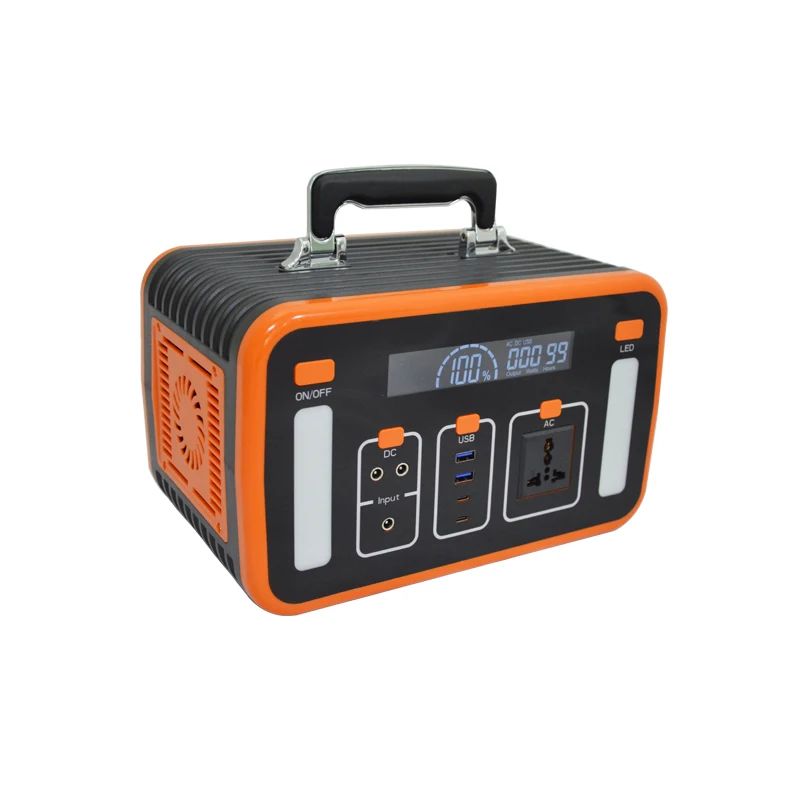
BPR-2000W specification in full
| Rated output | 2000W |
|---|---|
| Battery chemistry | LiFePO4 |
| Wireless charging | Yes |
| Charging methods | Three |
| Use | Indoor backup and outdoor power |
Indoor backup and outdoor power
The BPR-2000W's use is indoor backup and outdoor power: 2000W for the loads the 1000W class strains at, in a unit that is not a wheeled station. The wireless charging is the shelf detail — a phone set down on the unit charges, no cable hunt.
A 2000W station between classes
The BPR-2000W exists because the step from 1000W to the wheeled classes is too big for many buyers. At 2000W it covers the loads the 1000W class strains at — a fuller home-office backup, heavier outdoor work — in a unit that still belongs indoors and under a desk rather than in a garage corner. The wireless charging is the detail customers remember: a phone set down on the unit charges, no cable hunt, and in an outage that small convenience reads as thoughtfulness.
Three charging methods give the programme flexibility in how the unit is sold — as backup that lives on standby, as outdoor power that travels, or as both across a season.
Where the BPR-2000W sells
The two uses divide the class. Indoor backup: the unit sized for an apartment or home office, where a generator is not an option and a wheeled station is oversized. Outdoor power: the step up from the 1000W class for users whose load list outgrew it. The demonstration is the same for both: set a phone on it, watch it charge.
It also works as the emergency-preparedness shelf's middle step: above the gadget class, below the insurance class
How a BPR-2000W order is specified
This model's fixed points are its 2000W output, its LiFePO4 chemistry and its feature set — wireless charging and three charging methods. For a programme build, state the configuration and the branding you need with the inquiry. The three charging methods and the wireless charging pad are what a retail programme is built around: they are the features the end user sees on the shelf, and the ones a tested sample unit should be judged on.
Send your market, your branding requirements and your estimated volumes, and the reply carries the full specification of the build being quoted.
The three charging methods are the flexibility the programme is built on: say which of them your market will actually use, and add the socket standard it needs, and the build is quoted with both confirmed rather than assumed. A sample carries the same feature set as the quoted build — the wireless charging pad, the three charging methods and the full 2000W output — so the unit your team tests is the unit the programme sells.
The BPR-2000W on the shelf
Merchandising this class is a placement decision. Put it with the camping stations and it reads as an expensive upgrade; put it with home backup and it reads as the sensible middle — the unit for households that want real protection without furniture-scale equipment. A programme can show it in both places across a season: outdoor in summer, preparedness in the storm months, with the same unit telling both stories honestly.
The demonstration is thirty seconds long and needs no script: a phone set down to charge wirelessly, a lamp and a laptop running beside it. Samples for staff use are the cheapest training a programme can buy: run the thirty-second demonstration once and the class explains itself.
Ordering the BPR-2000W
As with the rest of the line: your market, your branding, and your quantity are what we need to quote.
Wholesale inquiries
Tell us the model, your quantity and your market — we reply with a quotation and lead time.