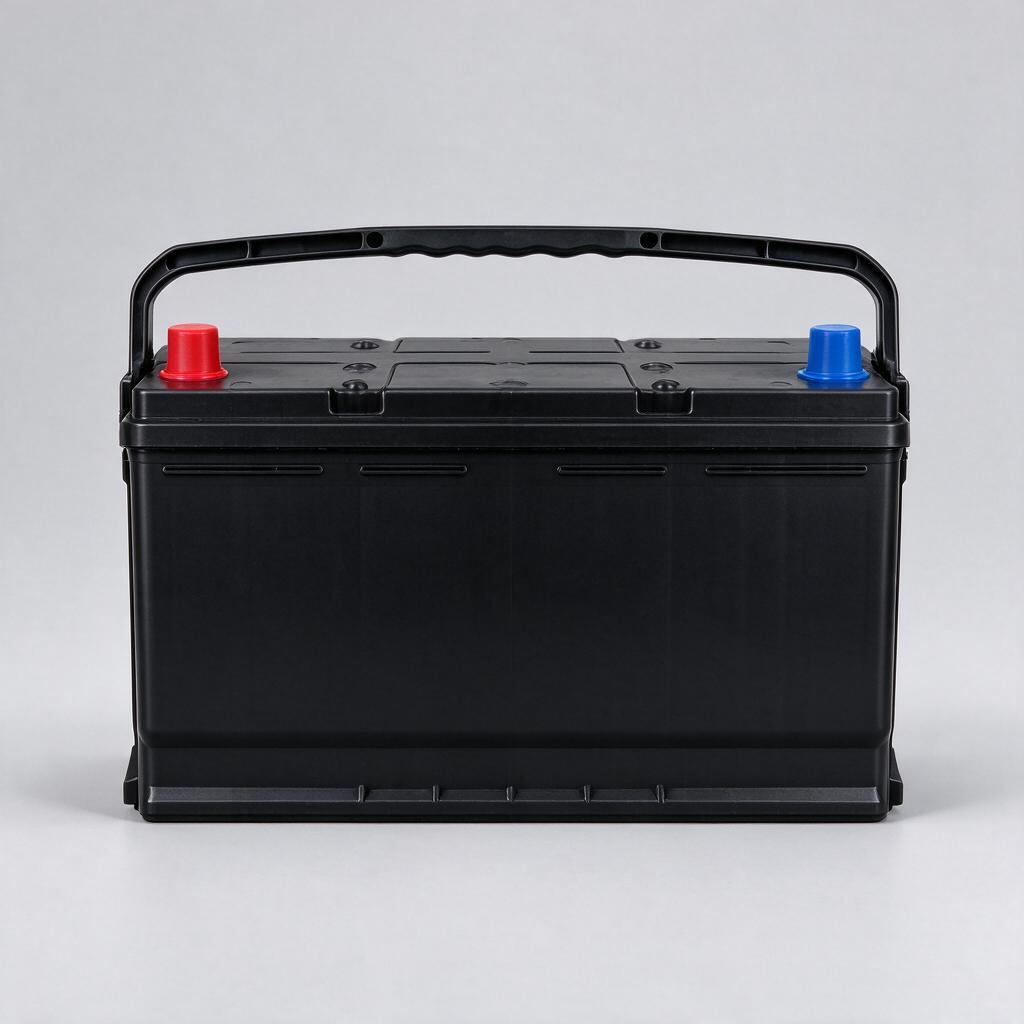
Where the 230Ah class fits
Most car starting needs far less than 230Ah. This class sits at the other end of the range: the single largest 12V capacity in the line, in sodium-ion chemistry, there for distributors who want one high-capacity unit at the top of their programme. Above the standard classes, the range's custom capacities run to 150Ah and 230Ah, so a distributor whose programme tops out above the 75Ah class is still working from one catalogue and one set of paperwork.
It is built to order rather than held as a standard tray size, and each order is briefed on its own application, as the sections below set out.
What the 230Ah class is for
Start with what it is not: it is not a car battery with extra capacity. It is the largest 12V class in the starter range, and every order is built to order — the application, the cranking profile, the space and the terminal arrangement are what the order is briefed on.
For distributors, it is the top step of the programme, and its place there is set by capacity: 230Ah is the largest figure in the starter line, and the class is quoted per order against the application brief.
How a 230Ah order gets specified
This class is sold to order, so the briefing does the specifying. Send the application, the cranking or load profile you need to cover, the space available and the terminal arrangement with your inquiry. Add the duty pattern — how often the unit cranks, what runs between starts, and the coldest start it has to make — and the quotation covers the build: dimensions, configuration and ratings.
Take the sample stage seriously on this class. A unit built to your specification should be tested on your engine or your load bank before a programme order follows.
Briefing starting duty and house loads separately
Installations that mix duties live or die on load separation. The starting event lasts seconds; house loads, where they exist, run for hours. When you brief us, split the two: what the engine needs to crank, and what runs afterwards and for how long.
That split decides the configuration. This class is quoted as a starter battery; where house loads run for hours, they are specified separately, as a deep-cycle bank from the storage range. Brief the two duties apart and each is specified on its own figures — that is the point of building packs to order.
Programme notes for distributors
Few distributors sell this class in volume, and that is fine. Its programme value sits at the top of the line: a programme that runs 30Ah, 50Ah, 75Ah and 230Ah carries the full capacity ladder from one supplier. Stock the class against orders rather than for the shelf, and let the core models carry the volume.
The 230Ah and the rest of the range
Buyers of this class often arrive from two directions at once: a starting problem at the top of the vehicle range, and a house-load problem that belongs to the storage catalogue. The two are quoted separately: this class as the starter battery, and a deep-cycle bank from the storage range for the house loads — rather than the largest box in the building sold by default.
Ordering the 230Ah class
This model is supplied to order. Send us the application, the cranking or load profile you need to cover, and your quantity — we reply with a quotation and lead time.
Wholesale inquiries
Tell us the model, your quantity and your market — we reply with a quotation and lead time.