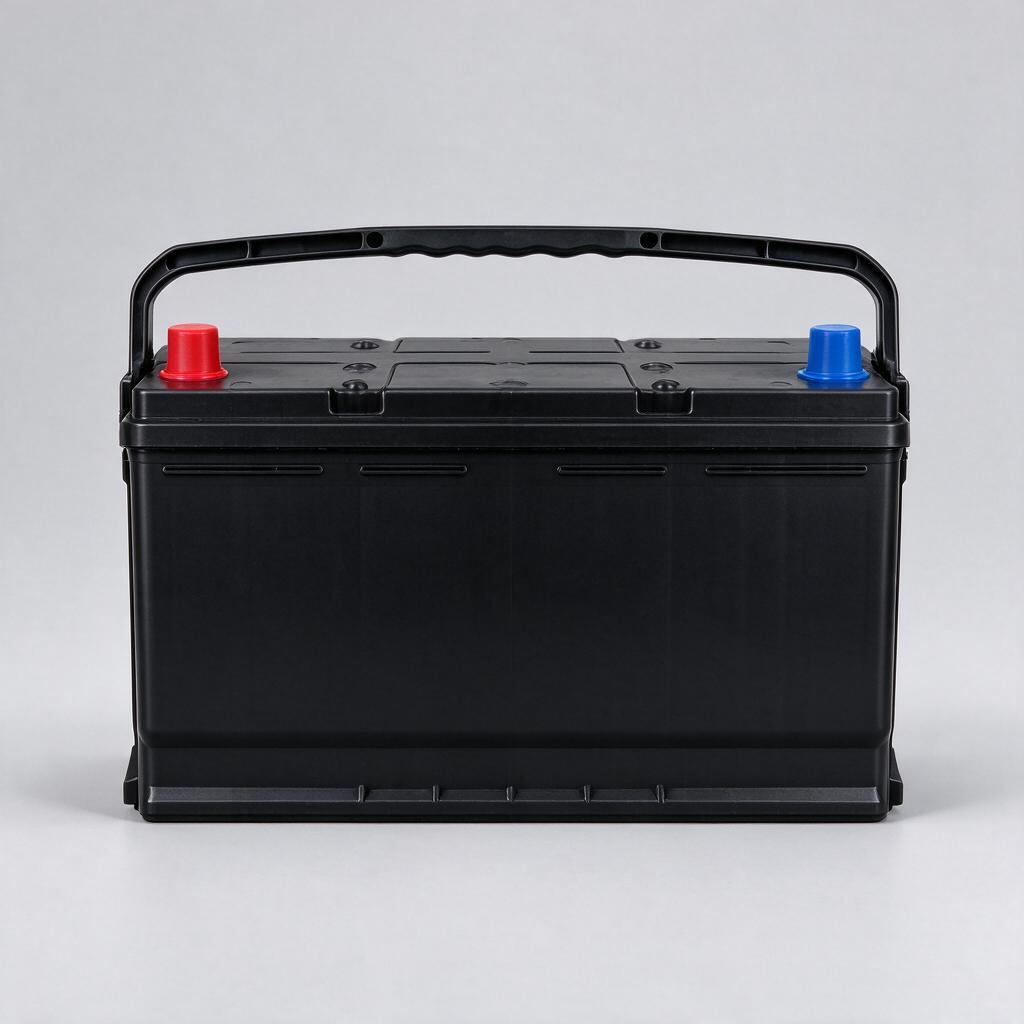
Capacity with configuration options
The standard build is 12V 75Ah. The same family can be configured at 150Ah or 230Ah, and at 24V, 36V or 48V. State the voltage and capacity your programme needs and the configuration is quoted from the family's own options.
Service life is rated at 6,000 or more cycles, the operating temperature window runs from −40°C to 85°C, and the case is sealed to IP65 against dust and water jets.
12V 75Ah specification in full
| Nominal voltage | 12V (24V / 36V / 48V custom) |
|---|---|
| Capacity | 75Ah (150Ah / 230Ah custom) |
| Cranking rating | 1000A CCA (car-starting configuration) |
| Cycle life | 6,000+ cycles |
| Operating temperature | −40°C to 85°C |
| Protection rating | IP65 |
| Customisation | Voltage and capacity built to order |
Reading the 75Ah figures
Three figures define this class. The 1000A CCA cranking rating belongs to the car-starting configuration — the cold-cranking number. The operating window, −40°C to 85°C, covers both ends of engine-bay life: the winter start and the summer heat soak after a hard run. IP65 sealing is the third: the case keeps dust and water jets out, where a vented battery breathes both in.
The cycle rating matches the 30Ah at 6,000 or more, so a programme can quote one service-life story across both core models — the difference between them is fit and headroom, not quality.
Where the 75Ah earns its place
What this class adds over the 30Ah is reserve: more capacity behind the same 12V format — 75Ah against 30Ah — with the same 6,000-plus cycle life and a 1000A CCA rating printed for this class. Standby load is the other sizing input: alarms, trackers and electronics that sip current around the clock draw on reserve. Send both figures with the inquiry — the cranking requirement and the standby draw — and the size is chosen against them rather than assumed.
If the job is purely deep-cycle, with no cranking at all, the LiFePO4 deep-cycle range is the better shelf to shop from — and we will say so in the reply to your inquiry rather than sell you a starter battery for a storage job.
Specifying a custom-voltage build
The custom options in this family are real design space: 24V, 36V or 48V builds, and 150Ah or 230Ah capacities, around the same platform. A custom build starts from your target — voltage, capacity, case constraints, terminal layout — so send those four things with your inquiry.
Allow the sample stage its time. A standard 12V 75Ah unit can be evaluated quickly; a custom-voltage variant should be tested in the actual application before volumes are committed. Test it the way the fleet will use it: the coldest start, the longest standby drain, and the charge cycle the vehicle actually runs.
Pairing the 75Ah with the 30Ah
In a two-model programme the split is simple: the 30Ah and the 75Ah are two capacities in the same 12V format, and the split is worked from the buyer's own figures — cranking demand, standby load, installation environment — model by model. Because both carry a 6,000-plus cycle life and the same chemistry story, the upsell conversation with a distributor's customer is about fit, not about quality tiers.
Ordering the 75Ah and its custom builds
Tell us the voltage and capacity you need and the application. Custom-voltage builds are quoted per configuration; standard 12V 75Ah units are the fastest route to samples.
Wholesale inquiries
Tell us the model, your quantity and your market — we reply with a quotation and lead time.