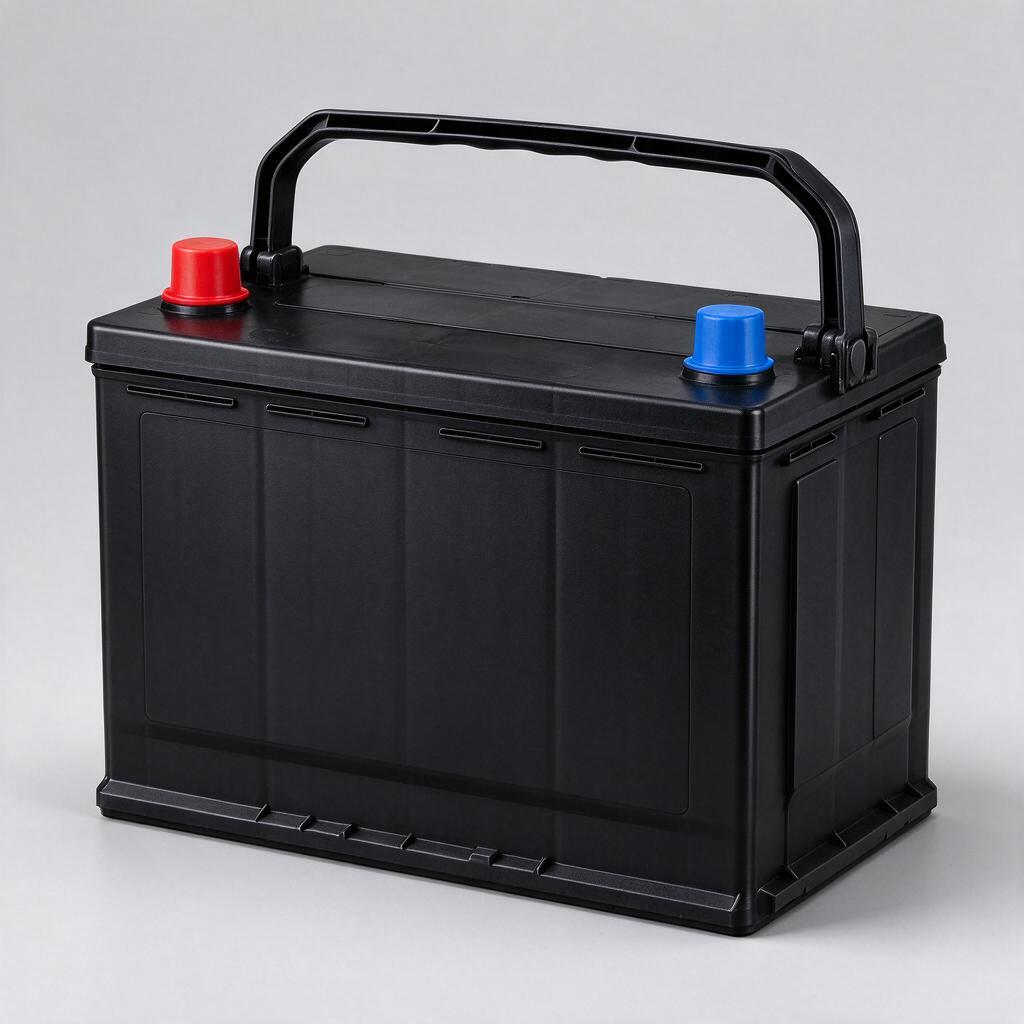
Why sodium-ion for starting
A starter battery has one hard job — delivering a large current burst on demand, in any weather. This unit is rated at 250A starting current with a 20C discharge burst for 15 seconds, and because the chemistry is sodium-ion, that performance barely moves with temperature: 80% discharge at −40°C and 90% at −20°C.
Cycle life is rated at 6,000 cycles or more. The chemistry carries no acid, no watering and no sulphation failure mode.
12V 30Ah specification in full
| Nominal voltage | 12V |
|---|---|
| Capacity | 30Ah |
| Starting current | 250A |
| Maximum charging current | 10A |
| Cycle life | 6,000 cycles or more |
| Discharge at −40°C | 80% of rated capacity |
| Discharge at −20°C | 90% of rated capacity |
| Charge / discharge rate | 3C charge, 5C discharge sustained; 20C for 15s |
| Case size | 197 × 128 × 200 mm |
| Terminals | Positive and negative posts |
| Application | Car starting |
How the 30Ah figures fit together
Read the specification as a system, not a list. The 250A starting current is the cranking figure — the burst the starter motor draws on a cold morning. The sustained rates are the everyday numbers — 5C discharge and 3C charge. Alongside them sits a 20C discharge rate for 15 seconds. The three rates describe different duties, and a programme should be specified against the duty its vehicles actually perform. The 10A maximum charging current is the ceiling for charging the battery off the vehicle.
The cycle figure needs the same care. The rating is 6,000 cycles or more. The model's other ratings are a 250A starting current, 5C sustained discharge and 3C charge.
Fitting the 197×128×200mm case
The case size — 197 × 128 × 200 mm — is the first thing to check against your market's vehicles. Measure the tray, the hold-down arrangement and the cable reach on the cars you are targeting; a battery that cranks perfectly but does not sit in the tray is the wrong battery, whatever its figures say.
Terminal layout is the second check. The model carries positive and negative posts; if your parc needs a reversed layout or a different post style on volume orders, raise it at inquiry stage — terminal and label variants are exactly the kind of detail to settle in the inquiry, before a programme depends on them.
The 30Ah in a distributor programme
This is the model the sodium-ion starter range is built around: the entry class of the ladder. Its cold figures are the range's headline numbers — 80% of discharge capacity retained at −40°C and 90% at −20°C, a cycle life of 6,000 or more, and sustained 3C charge and 5C discharge ratings — so a cold-market evaluation starts here: order the sample and run your own cold-chamber test against those figures. The ladder steps up from it — the 50Ah above it, the 75Ah at the top, the 230Ah beyond that, and the LP12 motorcycle series alongside it — one chemistry, in a capacity ladder.
For evaluation, take a sample and run your own cold test at the lowest temperature your market actually sees. The figure to test against is 80% discharge at −40°C; a freezer test on your own bench is worth more than any brochure, ours included, and it is the test your fleet customers will run anyway.
Ordering the 12V 30Ah
Confirm the case size against your vehicle's battery tray and check the terminal layout you need. OEM branding and customised labels are available on this model; tell us your target market and quantity in the inquiry and we will quote accordingly.
Wholesale inquiries
Tell us the model, your quantity and your market — we reply with a quotation and lead time.